ServicesDual Tank Water Filtration
Dual Tank Water Filtration in Redondo Beach
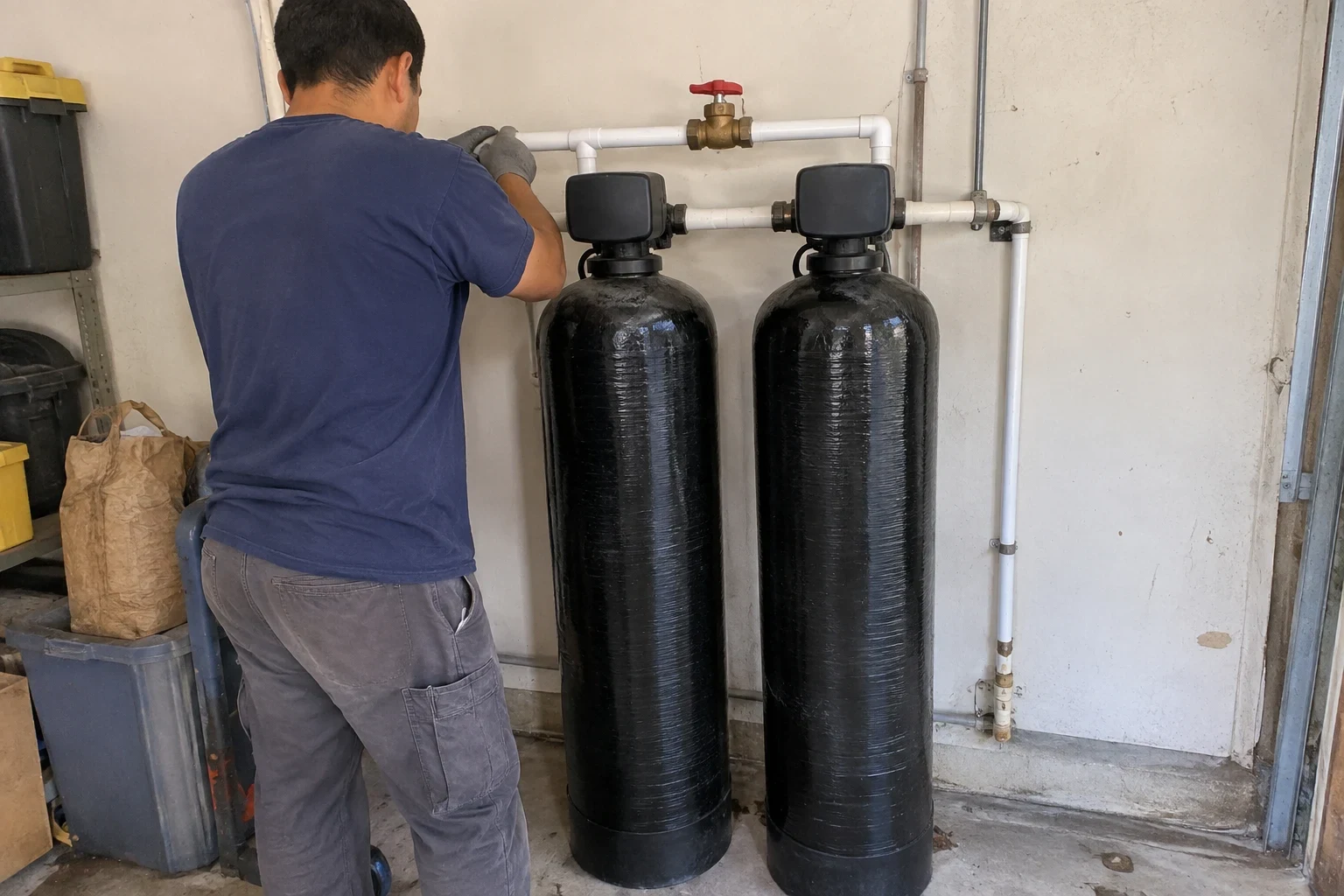
A dual tank system treats the water at the point it enters your home, so every tap and shower benefits. We size it to your household, plumb it to code with a bypass valve and an air-gapped drain, and explain each step before we start.
Two tanks, one clean supply for your home
A dual tank system splits the work between two tanks that water passes through in order. Each tank holds its own media, so one can focus on taste and odor while the second handles the next stage of treatment. Splitting the load lets each tank do its job well and helps the media last longer than a single tank asked to do everything.
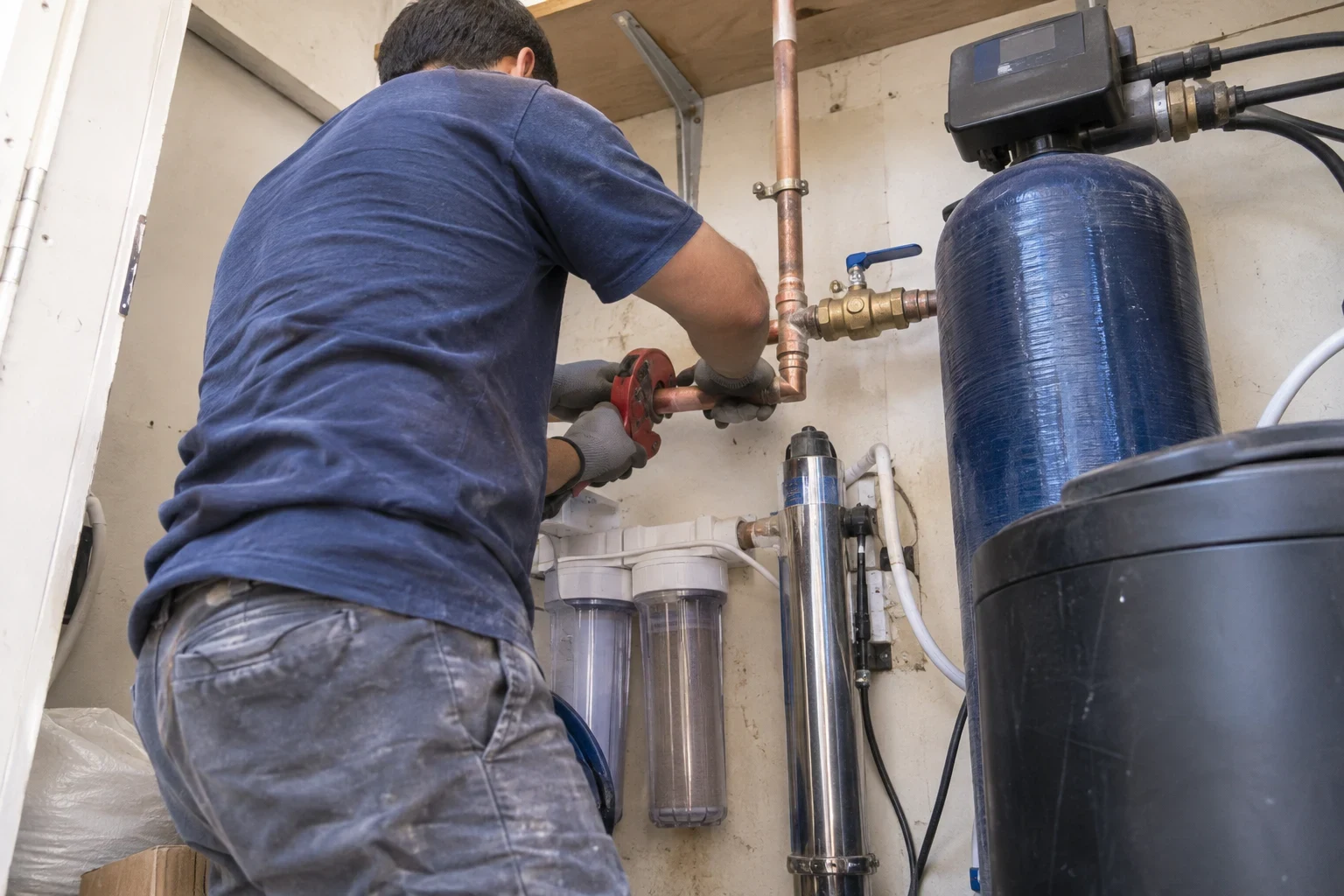
Because the system sits on your main water line, it changes the plumbing in your home. That is why we treat the install as plumbing work, not an appliance drop-off. We check whether a permit is needed, set the tanks where they can be serviced, and connect the backwash drain the way the plumbing code requires.
If you only want better water at the kitchen sink, our reverse osmosis page may be the better fit. We will tell you honestly which one makes sense for your home.
Everything that comes with your install
- Sized for the people in your home
- We find out how many people live with you, your number of bathrooms and your daily water habits. The tanks and flow rate are chosen from those answers, so a shower and the dishwasher can run at the same time without a pressure dip.
- Main line tie-in plus a bypass
- The system connects to your main water line along with a bypass valve. During service, a single turn routes water past the tanks so the house still has water.
- Drain work done to code
- On a set schedule the tanks rinse themselves, and code decides where that rinse water may go. Our drain line runs to an approved receptor and ends above its opening with open air in between. That gap keeps wastewater from ever being drawn back into your drinking water.
- Permits and inspection handled
- We check whether your city asks for a plumbing permit on this install and take care of the paperwork if it does. When an inspection is part of it, we book the visit and show the inspector the work.
- Salt tank filled on day one
- If your system has a salt tank, we load it during the install: the salt goes into the tank free of charge.
- First run and a full walkthrough
- The new media is rinsed, every joint is checked for leaks and we measure pressure at several fixtures. We then go over the bypass, the control settings and the upkeep with you.
Signs a dual tank system could help
Chlorine taste or smell
City water is disinfected so it stays safe on its way to you, and some people notice that taste in coffee, ice or a glass straight from the tap.
White spots and crusty fixtures
Mineral spots on glass shower doors and buildup around faucet aerators point to minerals in the supply. They also collect inside water heaters and appliances where you cannot see them.
Small filters that clog fast
If you keep swapping pitcher filters or faucet cartridges, a system on the main line can take that load off. It treats all the water once instead of a little at a time.
Water you notice in the shower
A smell when the shower runs hot or a film that is hard to rinse away are common reasons people call us. Treating water at the point of entry reaches every bathroom.
An old system nobody can explain
Many homes have tanks left by a previous owner with no bypass, a drain hose stuck in a floor drain or no record of service. We can tell you whether it is worth keeping or should be replaced and brought up to code.
How the job runs, start to finish
- 1
Start with a phone call
Describe what you notice about your water and how your plumbing is laid out, as far as you know. We ask a few questions and say plainly whether a dual tank setup sounds like a match.
- 2
A look at your plumbing
We find your main line, check the pipe material and pick a spot for the tanks with room for service and a legal drain route. Then you get your quote, with the plumbing work spelled out.
- 3
Paperwork before install day
When the city requires sign-off, we take care of it before we arrive with tanks, so the work happens in the right order. You will know ahead of time if an inspection visit is part of the plan.
- 4
Install day
We turn off the water at the main, cut in the system and its bypass, mount the tanks and run the drain with an air gap. You are without water for the connection work alone, and the rest of the day it runs as usual.
- 5
Flush, check and tidy up
The new media gets rinsed until the water runs clear, every joint is checked and we confirm pressure at your fixtures. Before we leave, the work area is cleaned and you have written notes on settings and upkeep.
What shapes the cost
Your install is free: we cover the cost of the installation itself. What you pay for is the system, and that depends on your home and what your water needs. We explain the options on the phone and during the visit so nothing on your quote is a surprise.
- Tank size and flow rate
- A larger household or more bathrooms needs bigger tanks to keep pressure steady. Sizing too small saves little and wears out media sooner.
- Media in each tank
- The media chosen for each tank depends on what you want to change about your water. Some media last longer or handle more water before they need replacing.
- Where the tanks go
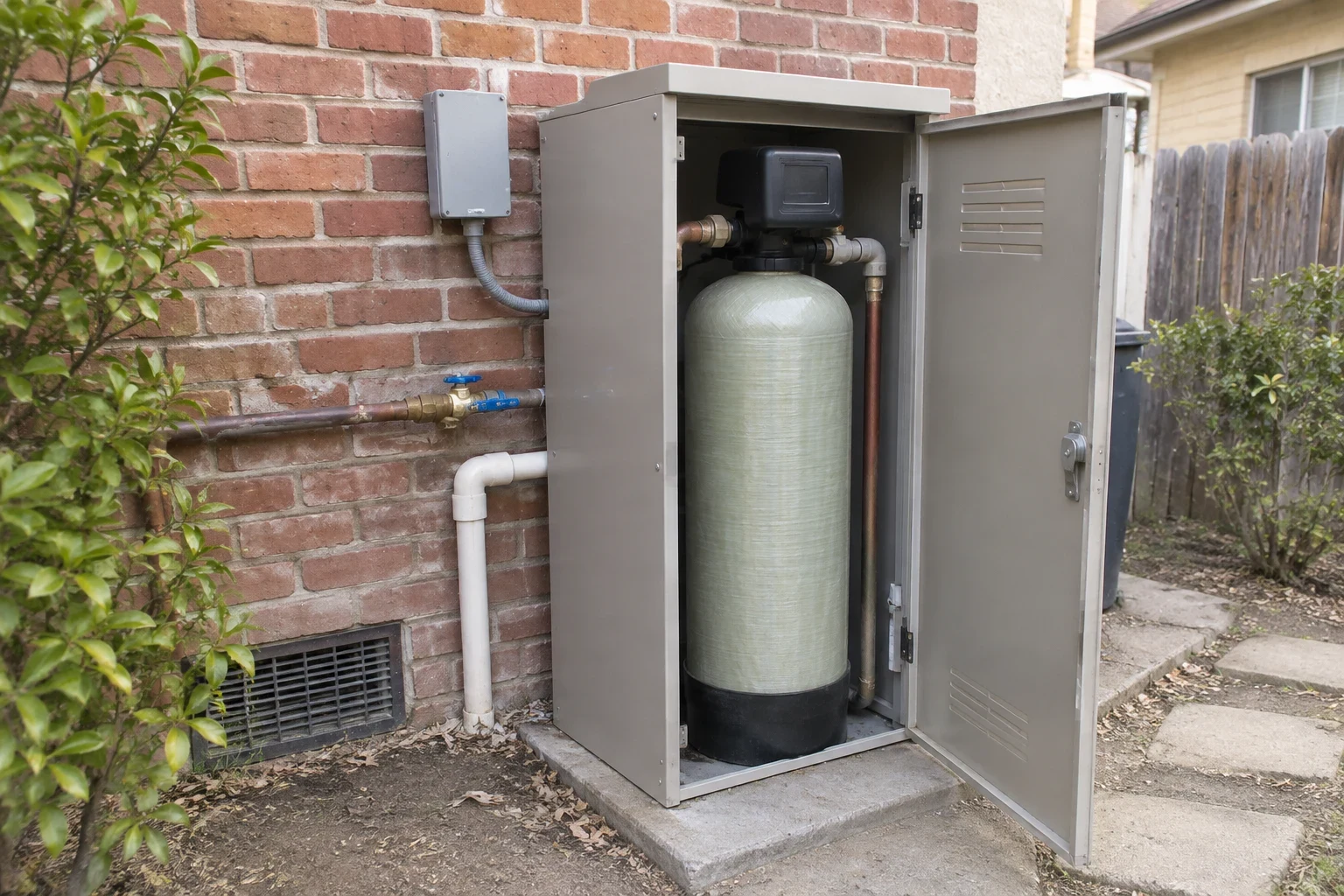
- A garage install near the main line is simple. If the tanks need to sit outdoors, they may need a cover or enclosure to protect the valve head from sun and weather.
- Your existing plumbing
- Copper, galvanized and PEX each connect differently. Older galvanized lines sometimes need a short section replaced so the new connection seals properly.
- City sign-off
- If a permit is required for your address, its fee is part of the job. We tell you up front whether one applies.
Common dual tank questions
Something not covered here? (310) 695-1065
Does a dual tank install require a permit?
That comes down to how much plumbing changes and what your city asks for at your address. Opening the main line and adding a drain counts as plumbing work, so we look up the rules before each job. If a permit is needed, we pull it and handle the inspection with you.
Will my water pressure go down?
With the right size system, you shouldn't notice a change from day to day. Low pressure usually means the tanks are too small for the household. We size to your home and check pressure at your fixtures once the system is up.
How long is the water shut off on install day?
Only while we open the main line and connect the new piping. The water comes back on while we set the tanks and run the drain. We warn you before shutting it off, so you can fill a pot or finish the laundry.
What upkeep does the system need?
The control valve handles backwash cycles by itself. Some setups need salt added now and then, and the media is replaced after years of use. We point out what to keep an eye on during the walkthrough.
How is it different from reverse osmosis?
A dual tank system is on the main line and treats water headed to every faucet, shower and appliance. Reverse osmosis sits under one sink and makes very pure water for drinking and cooking. Some homes have both, and we can help you figure out if that fits yours.
Why does the drain line need an air gap?
Backwashing sends rinse water to the drain. The air gap is open space between the end of the drain line and the drain, so that water can't be pulled back toward your faucets. Code calls for it, and inspectors look for it early.
Ready to talk about your water?
Tell us about your home and what you want to change, and we will explain the right system, the plumbing involved and whether an inspection is part of it. We serve Redondo Beach, Torrance, Hermosa Beach and nearby towns.