ServicesReverse Osmosis
Reverse Osmosis Systems in Redondo Beach
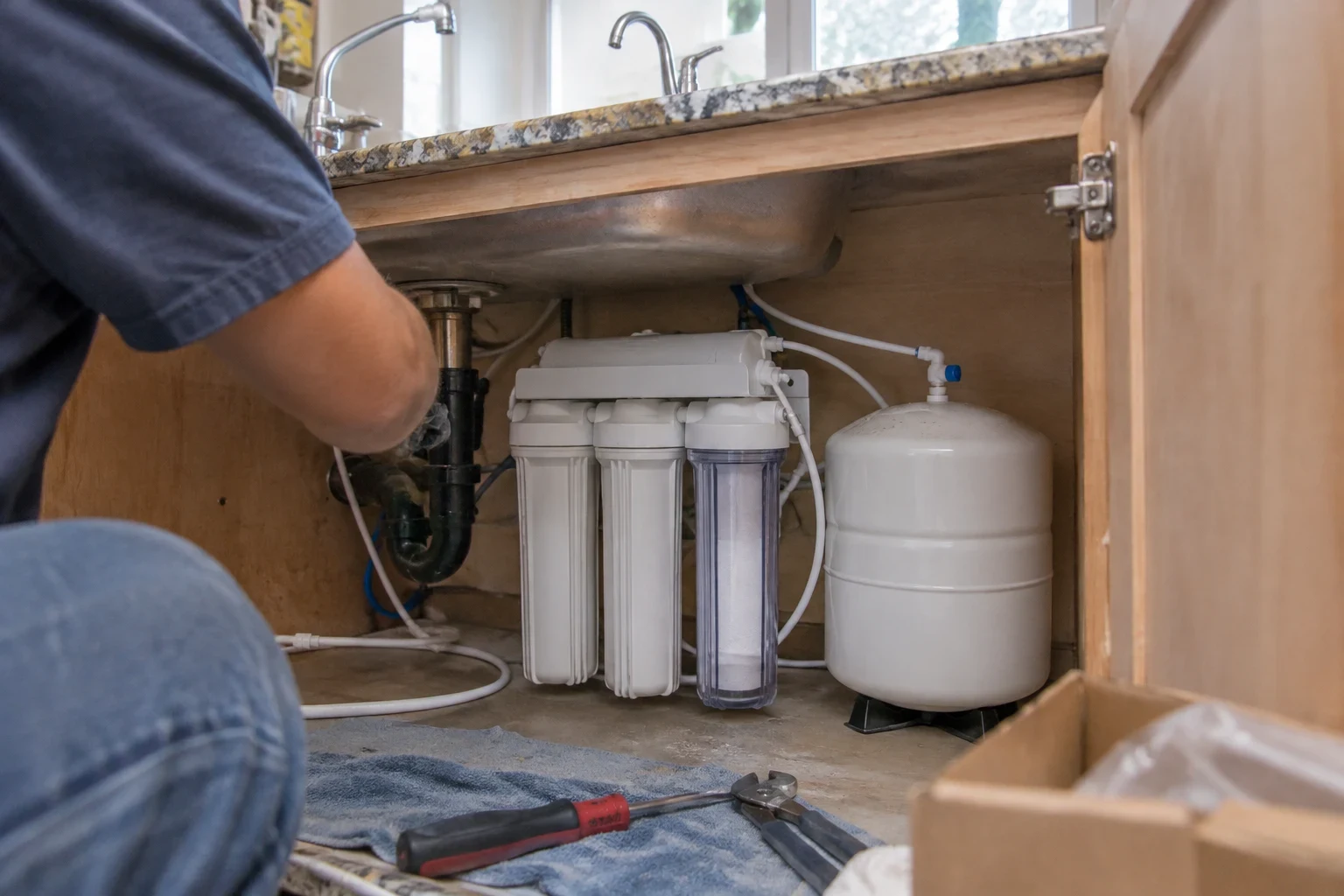
We fit reverse osmosis under your kitchen sink so the water you drink, brew and cook with flows from its own dedicated faucet. The membrane drain gets a proper air gap, and each connection is made to plumbing code. We cover the install cost, so you only pick the system and faucet.
How reverse osmosis works under your sink
A reverse osmosis system forces tap water through an extremely fine membrane. Water gets through, but most dissolved minerals, salts and many trace contaminants stay behind and are flushed to the drain. Two prefilters come first: one traps sand and rust, and a carbon filter removes chlorine that would otherwise shorten the membrane's life. After the storage tank, one last carbon stage leaves the water tasting clean and fresh.
RO treats water at a single point, usually its own small faucet next to your kitchen faucet, and it can supply the fridge as well. If you care more about the shower or laundry, start with our Whole Home Water Filtration and City Water Filtration pages, and we'll tell you honestly which suits you.
Southern California tap water often carries a heavy load of dissolved minerals, which is what leaves spots on glasses and makes coffee taste flat. For drinking water, RO takes them out more directly than anything else.
What comes with an RO install
- A multi-stage filter train
- Sediment and carbon prefilters, the RO membrane and a final polishing filter, all mounted on one bracket inside your sink cabinet. Every housing is labeled, which keeps filter changes simple.
- Storage tank and dedicated faucet
- A compact pressurized tank sits next to the filters. The faucet uses your existing sprayer or soap hole, and we only drill a new countertop hole if you say yes first.
- A code-correct drain connection
- Plumbing code requires an air gap so wastewater from the membrane can never be pulled back into the system. We use an air gap faucet or an approved drain fitting set above the trap. Quick installs often skip this, and it is the part we care about most.
- An accessible feed valve
- We add a dedicated shutoff on the cold line so you can turn off the system alone and keep your kitchen sink working.
- Optional fridge or ice maker line
- Want filtered water and ice from the refrigerator too? We run a separate supply line to it with its own shutoff.
- Leak check, walkthrough and cleanup
- We flush the first tank, check every fitting, show you how filter changes work and leave the cabinet as tidy as we found it.
When it may be time for RO in your home
Cases of bottled water keep piling up
Hauling water home every week costs money, takes up pantry room and overflows the recycling bin. An RO faucet gives you water of that same quality right at the counter.
White crust on the kettle and coffee maker
Scale building up inside appliances hints at what is in your drinking water too. RO removes most of those dissolved solids.
A chlorine taste or smell
The carbon stages pull out chlorine before the water reaches your glass, so ice and coffee taste cleaner.
Older pipes in the house
If you worry about metals like lead coming from older plumbing, an RO membrane is one of the most effective ways to reduce them at the tap you drink from.
An old system that drips or runs slow
A tank that never fills, a faucet that trickles or a damp cabinet floor usually points to worn parts or a drain that was never set up right. We can replace it with a system installed properly.
How install day goes
- 1
A conversation by phone first
We ask about your sink, the cabinet space, your countertop material and whether you want a fridge line. That gives us enough to quote you by phone before anyone comes out.
- 2
Planning the drain and faucet
When we arrive we look under the sink, locate the cold supply and confirm where the drain fitting can sit above the trap. If a garbage disposal is in the way, we show you the layout before drilling anything.
- 3
Installing the system
We turn off the cold water and add the feed valve. Then the filter bracket and tank go in, the faucet is set, and the drain line is connected through its air gap. Most installs take part of a morning or afternoon.
- 4
Flushing and leak testing
The first tank is flushed to clear the new filters. We check pressure at the faucet and wipe every fitting dry to recheck it before we pack up.
- 5
Walkthrough and cleanup
We show you the shutoff, explain when each filter is due and haul away every bit of packaging and tubing.
What affects the price of an RO system
Install is free because we cover the cost, so your price comes down to the system itself and a few choices. We talk through each one on the phone so the quote you hear matches what ends up under your sink.
- Stages and membrane capacity
- A basic four-stage system costs less than one with extra filtration or a higher daily output for a large household.
- Tank or tankless design
- Tankless units save cabinet space but use a pump, which needs a nearby electrical outlet. A traditional tank system needs no power.
- Faucet style and finish
- Standard chrome faucets cost less than matching designer finishes or air gap faucets with special trim.
- Remineralization stage
- Some people like a stage that adds a little calcium and magnesium back for taste. It is optional and adds to the system price.
- Extra lines
- Running filtered water to the fridge or an ice maker adds tubing, fittings and a shutoff.
Common reverse osmosis questions
Something not covered here? (310) 695-1065
Does an RO install need a permit?
Most under-sink systems hook into your kitchen's existing plumbing, so a separate permit usually isn't required. Code still matters: the drain needs an air gap or approved backflow protection, and the feed valve must be easy to get to. If your kitchen needs a change that affects this, such as a new outlet for a pump, we let you know first.
How much water does RO send to the drain?
Any RO system uses a bit of water to rinse the membrane, and that water goes to the drain. Older units drained several gallons for every gallon they filtered. Newer efficient membranes and permeate pumps waste much less, and we compare models with you when we quote.
Will RO strip out good minerals as well?
It does take out most dissolved minerals, helpful ones too. Most of the minerals your body needs come from food, not water. If you like a slight mineral taste, a remineralization stage puts a little back.
How often do the filters need replacing?
Plan on new prefilters once or twice a year, more often in a busy kitchen. The membrane lasts longer, often two to three years. On install day we show you how to change them yourself, so you never wait for a service visit.
Will it fit under a sink with a garbage disposal?
Usually, yes. The filters attach to a side wall of the cabinet and the tank fits in a back corner. We place the drain fitting so the disposal stays clear of it.
Cleaner drinking water, installed correctly
Tell us a little about your kitchen sink and what you dislike about your water today. We'll explain your system options plainly and give you a clear quote on that same call.